Frigidaire for Commercial Buildings: A Comparison of Repairability, Kitchen Layout, and User Confusion
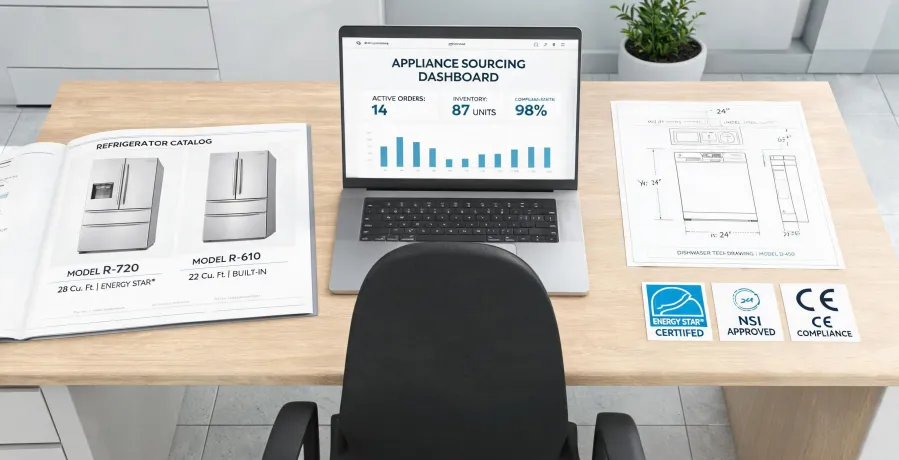
I'm a facilities coordinator handling appliance replacement and repair orders for commercial properties for nine years. I've personally made—and documented—14 significant mistakes, totaling roughly $23,000 in wasted budget. Now I maintain our team's checklist. That's the short version of how I became the person who obsesses over parts diagrams.
The comparison I want to walk through isn't Frigidaire vs. Samsung. I've managed both, and neither brand is a villain. The real comparison is between two purchasing strategies.
Strategy A: Buy the appliance that's cheapest to install and easiest for a tenant to operate.
Strategy B: Buy the appliance that's cheapest to repair and easiest for a service team to maintain.
If you're buying one refrigerator for your own kitchen, Strategy A can work. If you're buying 40 refrigerators for a hotel, Strategy B is the difference between a one-hour fix and a week of guest complaints.
1. Refrigerator repairs: reset codes vs. parts diagrams
I have several Samsung French door refrigerators in one building. They are solid units. The Samsung French door refrigerator reset is a real procedure—or rather, it's easy if you have the manual. You hold the right buttons, wait for the chime, and the control board restarts. It fixes some glitches. But a reset doesn't replace a bad compressor fan or a faulty ice maker motor. When that happens, you need the part.
With Frigidaire, finding the part usually starts with a parts diagram. Enter the model number, find the exploded view, and order the exact component. The first time I did this, I remember thinking: this is what serviceability looks like.
The comparison matters because downtime costs more than the part. A reset is faster, but it's not a repair. If you found this article because you typed 'samsung french door refrigerator reset' into Google, here's the honest version: reset the fridge, check the manual for your model, and if it's still warm after 24 hours, call a technician.
Frigidaire isn't perfect—I've had a Frigidaire ice maker fail too. But when it failed, I had the part number and diagram in 20 minutes. Compare that to a sealed system diagnosis that starts with a service visit and a 'we'll need to order it' phone call.
I also learned never to judge an order by its size. I once needed a $47 replacement part for a Frigidaire mini fridge. The distributor treated it like a normal order, no minimum, no attitude. That's when I stopped worrying about buying residential-grade appliances for light commercial use.
2. Laundry rooms: part numbers vs. service calls
The same logic applies to washers. Commercial laundry machines get hammered. I once ignored a small leak because I was too busy to read the manual. A week later, the drain pump failed entirely. Looking back, I should have ordered the part on day one. At the time I thought the leak would just stop. It didn't.
The Frigidaire washing machine parts diagram is the closest thing I've found to a cheat code. The first time I used it, I saved a $400 service call by replacing a drain pump myself. The diagram showed the pump, the screws, and the part number in one view.
My one caution: don't use a generic replacement just because it's cheaper. I did that once with a $30 pump. The pins didn't match. The redo cost me two days and another service visit. Total cost of ownership matters more than list price.
A parts diagram isn't glamorous, but it tells you whether the manufacturer expects you to repair the machine or throw it away. I've worked with appliances where the only option was replacing a sealed module. The Frigidaire washing machine parts diagram, by contrast, shows a machine built from replaceable pieces. That distinction matters for B2B buyers.
3. Kitchen equipment: gas cooktop and oven combo vs. separate units
For a residential-style kitchen in a commercial building, the biggest decision is often whether to buy a gas cooktop and oven combo or separate cooktop and wall oven.
A combo saves space, requires one gas connection, and uses one set of controls. A separate setup gives you redundancy. If the oven in a combo fails, you lose the cooktop too. If a wall oven fails, the cooktop still works.
I had to make this call once in a hurry. I had two hours to decide before a construction deadline. Normally I'd spec separate units, but there was no time. I went with a Frigidaire gas cooktop and oven combo. For that break room, it was the right call: one installation, one gas line, less labor.
For a serious catering kitchen, I'd choose separate units even if it costs more. The downtime risk is different.
And if you're here for the basics: how to preheat a Frigidaire oven is about as simple as it gets. Press Bake, set the temperature, press Start. On a gas cooktop and oven combo, the first preheat can sound aggressive because the gas igniter clicks until the flame locks in. That's normal. The official support pages for the model we buy say to keep the door closed during preheat. I'd second that, mainly because opening the door makes a gas range take even longer.
The other thing I pay attention to is how the oven controls behave after a power surge. A gas cooktop and oven combo with simple dials and a separate oven control is easier to troubleshoot than a fully digital unit. I'm not saying you should avoid digital controls. I'm saying 'easy to use' and 'easy to troubleshoot' are not the same.
4. Mini fridges: dials vs. digital displays
Mini fridges cause more confusion than any other appliance. One of our office managers asked me: is 1 or 6 colder on a mini fridge? She wasn't being clueless. The dial had no cold marker. On the Frigidaire mini fridges we keep in break rooms, 1 is the warmest setting and 6 is the coldest. Other brands can be different, so I always check the manual before assuming.
The comparison here is simple: a numbered dial costs less and has fewer electronics to fail. A digital temperature display costs more but removes the guesswork. For a guest room, I'd pay extra for digital or label the dial. For an office break room, a small label next to the dial is enough.
I learned this after we installed 20 mini fridges in one month and got temperature complaints on six of them. The issue wasn't the fridges. It was the dial. We printed labels and moved on.
And don't assume that a higher dial number always means colder. Some older units treat 1 as the coldest. I made that mistake in reverse. Actually, the first mini fridge I ever stocked was a used unit with a worn-off label. I set it to 2, thinking it was warm. The fridge was nearly freezing the yogurt. Put another way: if you don't know, look at the manual.
5. What I'd choose today
The most frustrating part of appliance maintenance isn't the breakdown. It's the search. I want to work on a machine that gives me a diagram, not a scavenger hunt.
So which strategy wins? It depends on your tolerance for downtime. If a broken appliance is just an inconvenience, Strategy A is fine. If a broken appliance means a full hotel room or a lost tenant, Strategy B is worth the extra planning.
Here's the honest conclusion after nine years and too many mistakes:
- If you're stocking break rooms and hotel rooms, Frigidaire's repairability makes it a strong default. Download the parts diagrams while the warranty is active.
- If you have Samsung French door refrigerators, keep the reset instructions nearby. Just don't confuse a reset with a service plan.
- Buy a gas cooktop and oven combo only if you can tolerate losing both functions during a repair. For extended downtime, choose separate units.
- For mini fridges, mark the dial or choose digital displays so guests don't have to ask whether 1 or 6 is colder.
Oh, and one more thing. Take small orders seriously. I still remember the parts distributor who didn't laugh at my $47 order. I send them the bigger orders now. Small doesn't mean unimportant—it means potential.
Small doesn't mean unimportant—it means potential.
My experience is based on about 200 appliance orders in light commercial settings. If you're managing a high-volume restaurant or a full-service laundry, your experience might differ.

Greta Lindholm
Greta Lindholm is a household refrigeration analyst covering French-door, side-by-side, top- and bottom-mount refrigerators, mini fridges, beverage coolers, chest freezers, and upright freezers. She applies IEC 62552 and IEC 60335-2-24 while comparing energy consumption, usable volume, pull-down time, compartment temperature stability, freezing capacity, noise, door-seal leakage, refrigerant charge, and ambient-temperature performance. Her guides help importers, distributors, private-label teams, and appliance engineers select platforms around climate class, storage mix, efficiency labels, cabinet dimensions, service access, shipping density, and warranty exposure.