Frigidaire Service Repair: Why Preparation Beats the Emergency Call
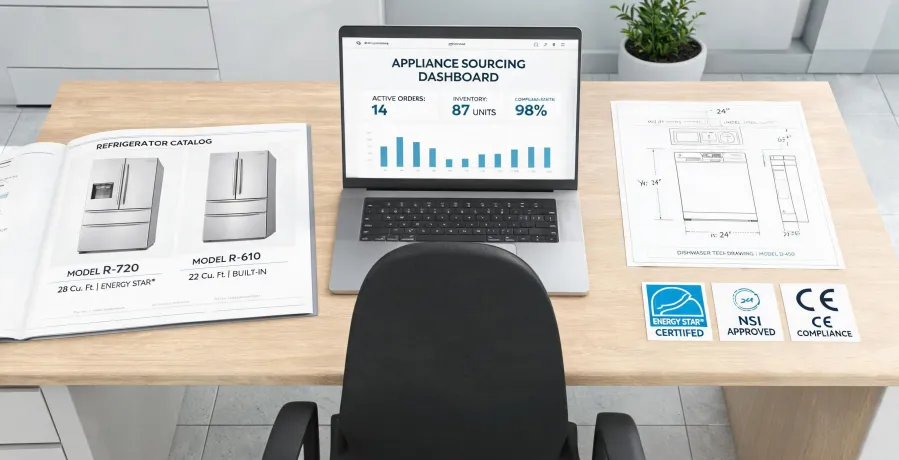
When a commercial appliance fails, the speed of the repair has almost nothing to do with how fast the repair truck drives. It has everything to do with how prepared you were before you picked up the phone. In five years coordinating Frigidaire service repair for hotels, apartment buildings, and office complexes, almost every same-day fix that went smoothly came down to the same few things: the caller had the model number ready, knew the warranty status, had a service provider that actually handles commercial equipment, and made the call before noon. Preparation beats emergency response, every single time. Everything else is noise.
Let me give you the checklist we wish every property manager had before an emergency:
- Model and serial number written down somewhere a manager can find at 3 AM.
- Warranty status verified--before the breakdown, not during it.
- A service relationship established ahead of time.
- The phone call made early in the day, if at all possible.
A quick note on the last one: after 2 PM, a same-day repair becomes a next-morning repair more often than you'd think. Techs are already on the road, trucks are loaded, and dispatch has committed the available slots. The emergency call you make at 8 AM has a much better outcome than the exact same call made at 3 PM. That's not a sales pitch. It's just scheduling reality.
I'm a service coordinator at a regional appliance repair company that works mostly commercial accounts. I've processed more than 200 emergency repair calls, ranging from a $200 parts-only fix to a $15,000 refrigeration replacement. In March 2024, a boutique hotel called at 4:30 PM about a walk-in cooler that had died--36 hours before a 200-guest wedding reception. The property manager had the model number, knew the unit was under a commercial contract, and followed the escalation protocol we'd set up six months earlier. A tech was on-site by 7 PM, and the cooler was back to 38°F by lunch the next day. It wasn't luck. It was preparation.
The 1950s Frigidaire Refrigerator Question
You'd be surprised how often the 1950s Frigidaire refrigerator comes up in our work. People mention it at trade shows, in service calls, and they ask about it when comparing brands for a new installation. They're not wrong to be impressed--some of those old units are still running in basements and garages. That says something real about the engineering. They were simple machines with oversized compressors and no circuit boards to fail.
But here's the part I share with property managers: heritage is not a procurement strategy. A 1950s Frigidaire refrigerator still running today doesn't mean a modern unit is built to the same standard. It isn't. Today's refrigerators trade some of that simplicity for energy efficiency, smarter cooling, and all the features tenants expect. That means more complexity, and complexity means more points of failure. The tradeoff is usually worth it, but your maintenance expectations need to be realistic.
I've also worked on a few of those vintage units in homes, and honestly, parts for the 1950s Frigidaire refrigerator are getting harder to find every year. We can still fix most of them--the mechanical bones are simple--but the refrigerants they were built with are no longer in production, and replacements require retrofits. It's a labor of love, not a business decision. If you're managing a property, buy the modern unit and set up a service plan. Don't buy a vintage machine hoping it will perform like the old one in your grandmother's kitchen.
Frigidaire Service and Repair: What Actually Matters
The question everyone asks is, "Is Frigidaire reliable?" The question they should be asking is, "How fast can this get fixed when it breaks?"
In commercial settings, that second question determines your real cost. A hotel can absorb a maintenance issue that takes two days to resolve. It cannot absorb a freezer failure that takes three weeks to source a part. Service speed isn't a luxury--it's the difference between a bad week and a catastrophic month.
The reason we recommend Frigidaire to a lot of commercial customers isn't just the equipment. It's the parts ecosystem. Frigidaire has been in this market for decades, and the distribution network is wide. When we need a compressor or a control board for a Frigidaire unit, it's usually in stock at a local distributor or one day away. That's not true for every brand you can buy. And in an emergency, parts availability matters more than any spec sheet.
The 35-Inch Wide Side-by-Side Spec Trap
When replacement becomes the right call, the spec sheet is where things go sideways. The most common trap I see is the 35 inch wide side by side refrigerator. It's a popular configuration for hotel suites and apartment kitchens, but the "35-inch" measurement is the rough opening width, not the actual cabinet width. It also doesn't account for doors needing room to swing open, or the clearance the unit needs at the back for ventilation.
One property manager ordered a 35-inch model for an alcove that was exactly 35 inches wide. The unit physically fit. The doors didn't open past 90 degrees. That's roughly a $2,500 mistake that can't be returned once it's installed. Measure the alcove for width, depth, and height. Verify the door swing and hinge side. Check the ventilation requirements. It takes twenty minutes and saves one very expensive lesson.
What About the GE 4.8 Top Load Washer?
Other brands come up a lot in my conversations with property managers. The GE 4.8 top load washer is one I hear about frequently for multifamily laundry rooms. It's a solid unit with a strong reputation, and we service GE equipment without any brand loyalty drama. The badge on the front matters less than what happens after the sale.
When someone is choosing between a GE 4.8 top load washer and a Frigidaire commercial washer, I give them the same decision criteria I'd give anyone comparing brands: warranty terms, parts availability, service coverage in their area, and the total cost of ownership over the unit's life. A washer that's 10% cheaper but takes three weeks to get parts for will cost more in lost laundry revenue than the price difference. Compare the machines. Then compare the support systems.
The Strangest Call I've Taken
Let me take a moment to admit that service coordinators get some strange questions. Ice maker noises, dryer lint buildup, refrigerators beeping at 3 AM--those are all in a day's work. But someone once called and asked, "why does it itch when i use a massage gun?" I genuinely don't know. My best guess is skin sensitivity or the vibration agitating nerve endings, but I'm not a healthcare professional, and I told the caller that. Some questions are outside our department, and it's okay to say so.
I mention this because it connects to something real: people call us because they want a straight answer without the runaround. That's the standard you should expect from every vendor in your supply chain. Whether you're asking about appliance repair, parts availability, or delivery schedules, the right answer is an honest one--even when the honest answer is "I don't know, but I'll find out."
When an Emergency Call Is the Wrong Call
Here's where I draw the boundary on everything I said above. Not every failure deserves an emergency service call.
The most common mistake I see is calling for emergency repair on a unit that should have been replaced a year ago. If the repair estimate is more than half the cost of a new unit and the appliance is past its expected service life, the emergency call was the wrong move. You weren't hit by bad luck--you were hit by deferred maintenance.
If the repair costs more than half the price of a replacement and the unit is past its expected service life, replace it.
But that rule has exceptions. In rural areas where a new unit takes four weeks to arrive, a $900 repair on a ten-year-old refrigerator can make sense if it buys two years of operation. If you have a specialized unit that isn't made anymore, repair might be your only option. Every property is different, and the math changes depending on location, usage, and how hard it is to get equipment delivered. My rule of thumb is a starting point, not a substitute for running your own numbers.
One more thing: if the unit is still under warranty, that's not an emergency repair call--that's a warranty claim. Contact Frigidaire or your dealer first. An independent service company will usually end up routing you through the same warranty process, just with an extra step and a delay. Save yourself both.

Greta Lindholm
Greta Lindholm is a household refrigeration analyst covering French-door, side-by-side, top- and bottom-mount refrigerators, mini fridges, beverage coolers, chest freezers, and upright freezers. She applies IEC 62552 and IEC 60335-2-24 while comparing energy consumption, usable volume, pull-down time, compartment temperature stability, freezing capacity, noise, door-seal leakage, refrigerant charge, and ambient-temperature performance. Her guides help importers, distributors, private-label teams, and appliance engineers select platforms around climate class, storage mix, efficiency labels, cabinet dimensions, service access, shipping density, and warranty exposure.