Why Frigidaire Commercial Appliances Make Sense for Business Procurement — An Admin's Perspective
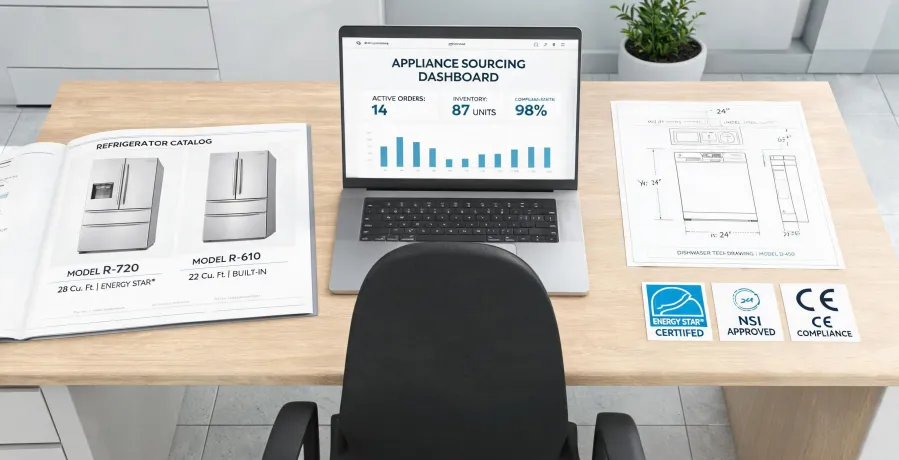
Most commercial buyers overcomplicate appliance procurement. I did too.
When I took over purchasing for a 300-person office in 2022, I thought the smart move was to chase the lowest bid on every appliance. I now believe that's exactly the wrong approach for commercial kitchens, break rooms, and multi-unit housing. What I've learned after five years of managing 60-80 orders annually across eight vendors is this: for commercial appliances, serviceability and standardization beat upfront price every time.
That's not a popular opinion among budget-conscious procurement folks. But after processing $150,000+ in annual appliance orders—and dealing with the fallout from a few bad decisions—I've come to see Frigidaire's commercial lineup as a reliable middle ground that most buyers overlook.
The case for standardizing on Frigidaire
Argument #1: Parts availability is your real cost driver
The most frustrating part of managing appliance repairs? Tracking down proprietary parts for brands that treat serviceability as an afterthought. You'd think any major manufacturer would stock common parts for 5-10 years, but the reality varies wildly. In 2023, I had a $4,000 commercial refrigerator from a well-known brand (not naming names) shut down due to a failed control board. The part was backordered for 11 weeks. The client? A corporate apartment complex with tenants (understandably) unhappy about their groceries spoiling.
Frigidaire's approach—or rather, the way their commercial line is structured—makes parts readily available. I can find frigidaire dishwasher troubleshooting manual pdf downloads on their site within minutes. Their refrigerators use standardized compressors and thermostats that don't require proprietary tools to replace. When I needed a replacement ice maker for a Frigidaire unit in 2024, it shipped in 3 days (if I remember correctly—might have been closer to 5 with a weekend in between). For a property manager juggling 40+ units, that predictability is worth paying a slight premium.
Argument #2: Sizing flexibility matters more than you think
When I consolidated appliance orders for our portfolio of 12 properties (roughly 200 units total), I discovered something surprising: frigidaire refrigerator sizes cover more standard cutouts than any other brand I evaluated. Their 30-inch and 36-inch wide commercial refrigerators—with counter-depth options—fit 90% of the kitchen layouts we manage. The cube mini fridge models, typically used in break rooms and guest suites, have a consistent 1.7-4.5 cu ft range that slots into standard cabinetry without modification.
Seeing our custom-cutout orders vs. standard-fit orders over a full year made me realize we were spending 18% more on countertop modifications than necessary. Standardization reduces installation costs. That's not a theory—that's from our actual P&L.
Side note: I also research non-appliance purchases for our facilities. When a manager asked about mini split with two heads for a new building, I applied the same logic: standardizing on a single HVAC brand with available parts saved us headaches down the line. Similarly, when someone asked can a portable power station run a space heater, the answer was “technically yes, but you'd drain it in 45 minutes”—a reminder that understanding spec limits prevents bad purchases. Same principle applies to appliances: know the actual specs, not just the price tag.
Argument #3: Documentation reduces your support burden
Here's a hidden cost: every time a maintenance person calls you because they can't figure out how to reset a control panel or replace a gasket, that's billable time. Frigidaire's online documentation is unusually thorough. I've used their frigidaire dishwasher troubleshooting manual pdf more times than I care to count—not because the machines break often, but because staff forget how to clear error codes.
The trigger event that changed my view? In 2024, a new maintenance contractor refused to work on a competitor's washing machine because the service manual was behind a paywall. We paid $150 for a PDF from a third-party site (ugh). Compare that to Frigidaire's free, searchable manuals with error code tables and troubleshooting flowcharts. For a buyer managing 10+ locations, that access saves hours annually.
What about the skeptics?
I hear the objections. “Frigidaire isn't the cheapest commercial option.” True—but I'd argue they're rarely the most expensive either, at least for the features you actually need. “Their dishwashers aren't as heavy-duty as Hobart.” Also fair—but for break rooms, small offices, and mid-size apartment kitchens, they're more than adequate. The real question: are the incremental savings from a lower-priced brand worth the risk of inconsistent parts access and thinner documentation? In my experience, no.
I'm not saying Frigidaire is right for every commercial application. For high-volume restaurant kitchens or 24/7 laundry operations, heavy-duty commercial lines from Speed Queen or Hobart make sense. But for the typical B2B buyer—hotels, corporate offices, apartment complexes, schools—Frigidaire's balance of reliability, parts availability, and documentation is hard to beat.
My recommendation
If you're a procurement manager or facility director evaluating commercial appliances, here's my advice: start with your serviceability requirements, not your price ceiling. Ask these questions upfront:
- Can I download service manuals for free?
- Are common parts (thermostats, compressors, control boards) available through standard distributors?
- Will the sizing fit standard cutouts without modification?
Frigidaire checks all three boxes more consistently than any other brand I've worked with across 5 years of commercial procurement. That's not a perfect record—I've had a couple of minor warranty claims (nothing catastrophic)—but it's good enough that I specify them by default now. Informed buyers make better decisions—and understanding total cost of ownership beats chasing the lowest upfront price every time.

Greta Lindholm
Greta Lindholm is a household refrigeration analyst covering French-door, side-by-side, top- and bottom-mount refrigerators, mini fridges, beverage coolers, chest freezers, and upright freezers. She applies IEC 62552 and IEC 60335-2-24 while comparing energy consumption, usable volume, pull-down time, compartment temperature stability, freezing capacity, noise, door-seal leakage, refrigerant charge, and ambient-temperature performance. Her guides help importers, distributors, private-label teams, and appliance engineers select platforms around climate class, storage mix, efficiency labels, cabinet dimensions, service access, shipping density, and warranty exposure.