Why Your Next Commercial Appliance Purchase Should Be Boring
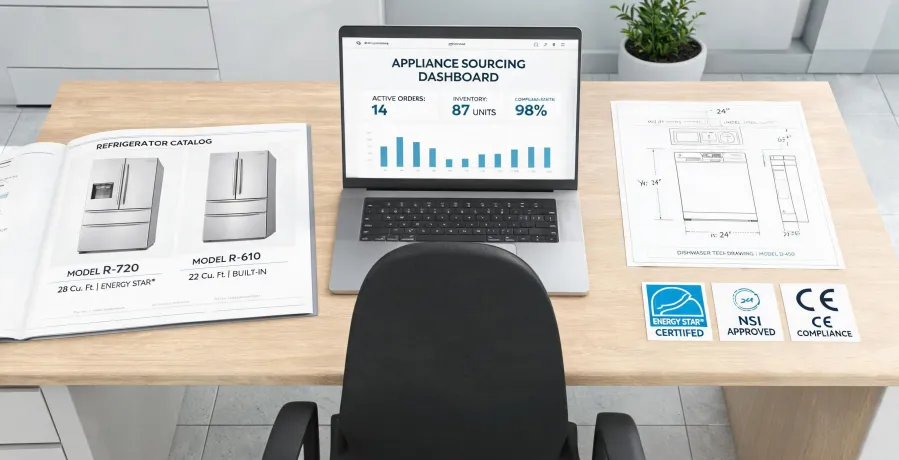
Stop Shopping for Appliances Like You're a Homeowner
If you're outfitting a hotel, an apartment building, or a chain of laundromats, I think you're making a mistake if you prioritize brand prestige or the latest smart features. You should be boring. Really boring. Prioritize service networks and parts availability above all else.
I've spent the last six years as a procurement specialist for a regional property management company. I've handled over 200 appliance orders for commercial properties, from a 50-unit apartment complex to a 200-room hotel. I've learned the hard way that a 'premium' residential appliance in a commercial setting is a disaster waiting to happen.
My Argument for the 'Boring' Choice
Here's the thing: a washing machine in a hotel laundry room doesn't need a steam cycle or a smartphone app. It needs to run three cycles back-to-back without breaking down. When it does break down, I need a replacement part available at a local distributor, not a two-week wait for a specialty part. This is where Frigidaire comes in. It's not the flashiest brand, but in my experience, it's one of the most practical for commercial use. Let me explain.
1. The 'Emergency' Call That Changed My Mind
In March 2024, I got a call at 4 PM on a Friday. A property manager in Minneapolis had a tenant move-out and needed a new washer and dryer installed by Monday morning. The tenant had already signed a new lease. The old units? A high-end Korean brand that had a control board failure. The part was on backorder for three weeks.
I had 48 hours to find, buy, and install a washer and dryer. I learned a valuable lesson about the Frigidaire ecosystem that weekend.
I called a local appliance distributor. They had a Frigidaire Gallery washer and dryer in stock. More importantly, they had the installation kit and a service tech available for Saturday morning. Normal turnaround for a non-emergency install is 5-7 days. We paid a $300 rush fee on top of the $1,800 unit cost.
Looking back, I should have specified Frigidaire from the start. At the time, the property owner wanted the 'nicer' brand for the tenant. But the 'nicer' brand cost us a weekend of chaos and an extra $300. The Frigidaire repair Minneapolis infrastructure was already there. It just wasn't in the spec.
2. The Parts Ecosystem is the Real Product
When I compared our emergency repair costs for different brands side-by-side, the data was undeniable. For a Frigidaire unit, the average wait for a common part like a belt or a thermostat was 1-2 days. For less common brands, it was 7-14 days. That downtime costs money. A hotel room without a working washing machine? That's lost revenue.
The surprise wasn't the price of the premium brand. It was the hidden cost of downtime. An informed customer, or in this case, an informed procurement specialist, asks better questions. 'How long for a replacement control board?' is a better question than 'Does this model have a steam cycle?'
I should mention that this isn't just about washers and dryers. We've had similar experiences with ranges and ovens. For a recent kitchen renovation in a senior living facility, the contractor specified a 'professional' range. I pushed back and suggested a plaster ready range hood from Frigidaire's commercial catalog. The contractor was skeptical until I showed him the parts availability list. He ended up buying Frigidaire for the entire kitchen.
3. The 'Smart' Feature Trap
Everyone's talking about smart locks and smart plugs. I get it. A loqed touch smart lock is cool for an Airbnb. But for a 100-unit apartment building? You're introducing complexity. I've seen a loqed touch smart lock fail on a common door because the battery died in -10°F weather. The maintenance team couldn't figure out how smart plug works for the timed lighting schedule. They just unplugged it.
In a commercial setting, reliability trumps features. A maintenance person shouldn't need a manual to figure out how smart plug works. They should be able to replace a part with a screwdriver and a 15-minute YouTube video. That's the Frigidaire advantage. It's not trying to be the smartest appliance in the room. It's trying to be the most serviceable one.
Responding to the Inevitable Criticisms
I know what some of you are thinking. 'That's fine for a budget property, but we're a luxury hotel.' Or, 'Frigidaire doesn't have the same professional cachet as other brands.' I hear you. But let me push back.
First, a luxury hotel doesn't need a luxury washing machine. It needs clean sheets. The machine is a utility, not a status symbol. Second, Frigidaire has a commercial-grade sub-brand that's specifically designed for high-volume use. It's not your grandmother's refrigerator. And honestly, the 'professional' brands often have worse service networks because they're targeting homeowners, not facilities managers.
Another criticism I hear is about energy efficiency or specific tech features. But in my world, a machine that works 99% of the time is more efficient than one that works 95% of the time but has a 10-day repair cycle. The math is pretty simple.
So, What's the Right Choice?
My position is clear: for commercial procurement, prioritize serviceability and parts availability. Don't get seduced by features you'll never use or a brand name that won't help you when a tenant's washing machine floods the hallway at 9 PM on a Saturday.
I'm not saying Frigidaire is the only option, or that it's perfect. I've had my share of issues. But I've had far fewer emergencies with them than with any other brand I've specified. An informed customer—or in this case, an informed procurement manager—makes faster, better decisions. And the best decision is often the boring one.

Greta Lindholm
Greta Lindholm is a household refrigeration analyst covering French-door, side-by-side, top- and bottom-mount refrigerators, mini fridges, beverage coolers, chest freezers, and upright freezers. She applies IEC 62552 and IEC 60335-2-24 while comparing energy consumption, usable volume, pull-down time, compartment temperature stability, freezing capacity, noise, door-seal leakage, refrigerant charge, and ambient-temperature performance. Her guides help importers, distributors, private-label teams, and appliance engineers select platforms around climate class, storage mix, efficiency labels, cabinet dimensions, service access, shipping density, and warranty exposure.